
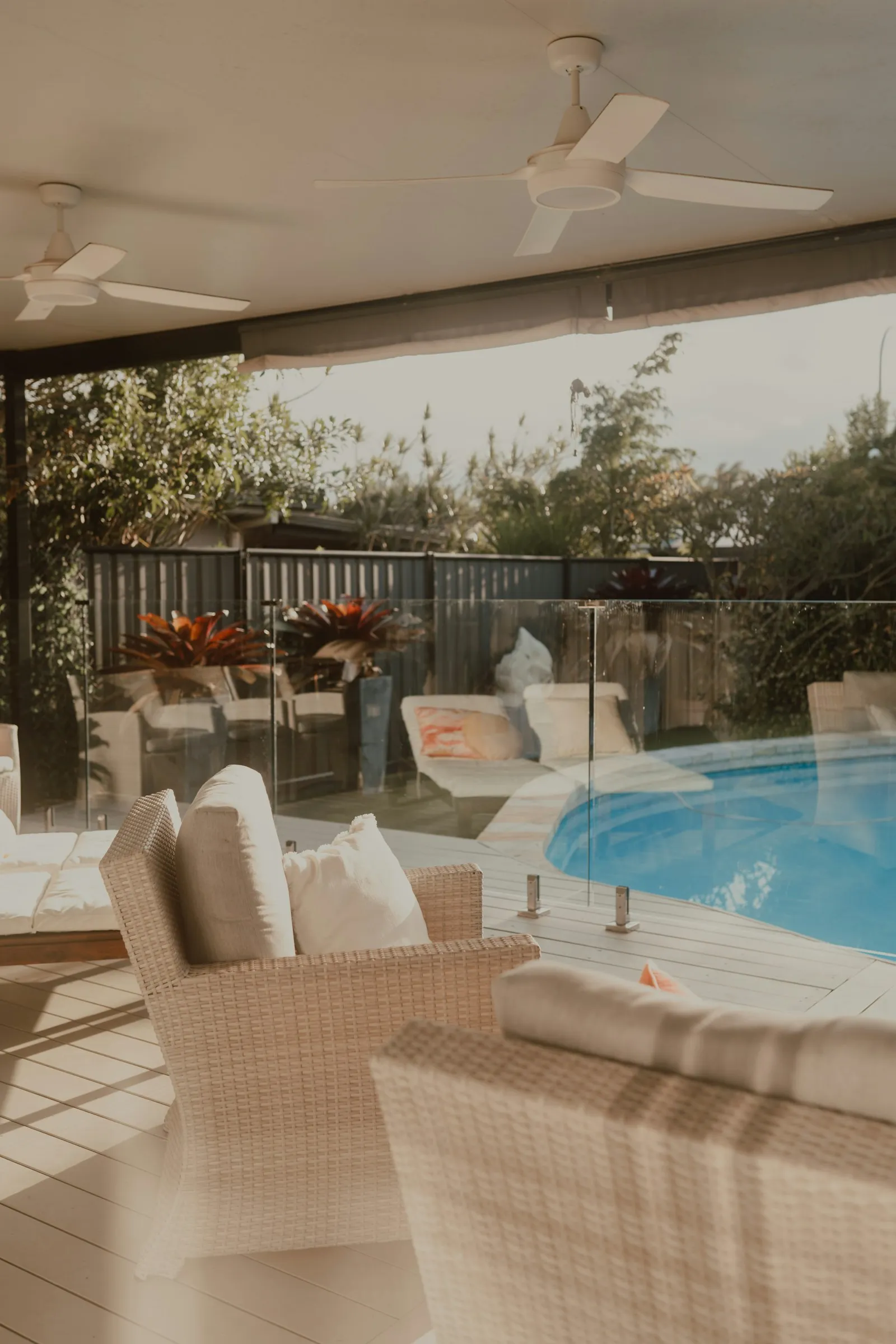
On a Victorian heritage-overlay property, Clause 43.01 can require a planning permit for a fence, pool or spa if it is visible from a street (other than a lane) or public park. That permit is separate from any building permit, and your council’s schedule to the overlay can vary the exemptions, so ask its planning department.
Does a heritage overlay need a planning permit for a pool?
Clause 43.01 turns on a sightline. On land the Heritage Overlay covers, a permit is required for “a fence, if the fence is visible from a street (other than a lane) or public park,” and for “a domestic swimming pool or spa and associated mechanical and safety equipment, if the swimming pool or spa and associated equipment are visible from a street (other than a lane) or public park.” We read that wording in Clause 43.01, the Heritage Overlay, in the Greater Geelong Planning Scheme. The same state planning-schemes site publishes the clause for every other council under that council’s own name, so you can pull up your own municipality’s version the same way.
Neither the overlay nor the pool is the trigger on its own. It takes both: a fence or pool that can be seen from a street or park, on a property the overlay covers. Note the carve-out in brackets, too. A lane isn’t a street for this test, although the schedule for your property can still change the answer. Because the clause is made under the Planning and Environment Act 1987, what it asks for is a planning permit, and that sits alongside the registration, standards and building-permit questions in our guide to the three layers of law behind your pool.
Planning permit vs building permit for a pool fence
Different Acts, different people. A heritage-overlay planning permit is assessed by your council’s planning department. Whether a barrier repair needs a building permit is decided under the Building Regulations 2018, made under the Building Act 1993, and that call belongs to a registered building surveyor. Our guide to the building permit question for barrier repairs works through the exemption that usually comes up after an inspection.
Nothing in Clause 43.01 says a building-permit exemption clears the planning side. Nothing in the Building Regulations says a planning permit clears the building side either. Surf Coast Shire’s building advice on pool barriers states a permit is required to construct or alter a pool safety barrier, and another Victorian council’s building advice says the same in fewer words. Both pages are about the building side; neither mentions heritage. A barrier repair on a heritage-overlay property can need both, one, or neither, depending on visibility and on which of the building-permit exemption’s own triggers it hits.
What triggers a heritage overlay planning permit for a fence in Victoria?
What’s visible, not why the work is happening. The clause doesn’t separate a new fence from a replacement or a repair, and inspections aren’t mentioned in it anywhere. A fence rebuilt after a failed inspection is read against the same visibility wording as one put up because the owner wanted a change.
That cuts both ways. Being flagged at an inspection doesn’t earn a visible heritage-overlay fence a shortcut through planning, and we found nothing in the clause that links the two processes or combines the applications. The inspection result doesn’t pull a barrier into the planning system either, if the visibility test isn’t met. In both cases the schedule for your property is the other half of the answer, and your council’s planning department reads the two together.
How do you find out if your property has a heritage overlay?
Clause 43.01 is one rule, applied the same way everywhere in Victoria. Whether it actually covers your property is a different, local question: each council administers the Heritage Overlay through its own planning scheme schedule, listing the specific properties, precincts and streets the overlay reaches. The schedule is also where exemptions can be varied for a particular place. So the clause gives you the rule, and only the schedule tells you whether, and how, it lands on your block.
Suburb, street name and the age of the house won’t settle it. Two homes on the same street can sit on opposite sides of an overlay boundary. Check with your council’s planning department or on its planning scheme map. We can’t look it up for you, because our registration covers pool safety inspections, not planning schemes. For the Form 23 side once the planning question is settled, we have pages on Queenscliffe pool barrier compliance, Surf Coast pool barrier compliance and Greater Geelong pool barrier compliance. Properties on the Victorian Heritage Register carry a further layer under the separate Heritage Act 2017, which is a different register and a different process from the planning scheme’s Heritage Overlay.
If a barrier repair follows a failed inspection, who handles the planning question?
We’re registered as a pool safety inspector, IN-PS 100055. We inspect a barrier against the applicable standard, issue a Form 23 when it passes, and issue a non-conformance report when it doesn’t. We don’t advise on or lodge planning applications, including anything under Clause 43.01. If your barrier sits on a heritage-overlay property and might be visible from a street or park, the planning question goes to your council’s planning department or a planning consultant.
The compliance side is where we come in. If this started with a council letter about your barrier or a failed inspection, our guide to what to do after a failed inspection walks through the sequence. If the fence is being rebuilt anyway, a compliance consultation is for planning the barrier itself before work starts, which is a separate matter from either permit. Registration is its own step again, and the Building and Plumbing Commission, the BPC (formerly the VBA), sets out its pool and spa registration requirements. Once the barrier work is done and any planning question is settled, book free re-inspections and we’ll close out the Form 23.
What to do next: If your property carries a heritage overlay and the fence or barrier might be visible from a street or park, put that question to your council’s planning department or a planning consultant before work starts. They’re the ones who can read the clause against your property’s schedule. Once the planning side is clear, book a pool barrier inspection and we’ll handle the Form 23. Questions about the inspection itself can go straight to Local Pool Inspections.
Pool safety services we provide
Common questions about heritage overlays and pool fence permits
Do I need a planning permit to repair my pool fence on a heritage overlay property?
Clause 43.01 asks whether the fence is visible from a street (other than a lane) or a public park. It doesn’t ask why the fence is being repaired. Your property’s schedule to the overlay can vary the exemptions, so put the specific job to your council’s planning department before work starts.
Is a heritage overlay planning permit the same as a building permit?
No. A heritage overlay planning permit is assessed by your council’s planning department under the Planning and Environment Act 1987. A building permit for barrier repair work is a separate question, assessed by a registered building surveyor under the Building Act 1993. Meeting one doesn’t exempt you from the other, and a barrier can need both, one or neither.
How do I find out if my property has a heritage overlay?
Clause 43.01 is one state-wide planning rule, but which properties it covers is set by each council’s own planning scheme schedule, not by suburb, street name or the age of the house. Check with your council’s planning department or on its planning scheme map. A pool safety inspection can’t tell you.
Does Local Pool Inspections help with heritage overlay planning permits?
No. We’re a registered pool safety inspector, IN-PS 100055, and we inspect barriers, issue Form 23s and handle re-inspections. We don’t advise on or lodge planning applications, including anything under Clause 43.01. If a heritage overlay applies to your property, talk to your council’s planning department or a planning consultant. Once the barrier work is done, we can inspect it.