
Form 23 Inspection
Ready to get certified? Full barrier check against the VBA standard, same-day Form 23 where compliant.
$250 flat

This is the same walk-through Ryan Gaw, VBA-registered Pool Safety Inspector (IN-PS 100055), runs through mentally at every barrier before he even opens the toolbag — gates, latch heights, the non-climbable zone, fence height, gaps. Twenty minutes around the outside of your fence, using this checklist, tells you almost everything a formal inspection will find. Call 0402 860 499 to book the certified inspection once you've self-checked.
Every pool and spa barrier inspection in Victoria runs against one technical standard, AS 1926.1, as referenced by the Building Regulations 2018. An inspector measures five things. Get all five right and a formal inspection has a genuinely good chance of passing first time — about nine in ten of the barriers we inspect do, and self-checking against this list is the single biggest lever owners have to move themselves into that group.
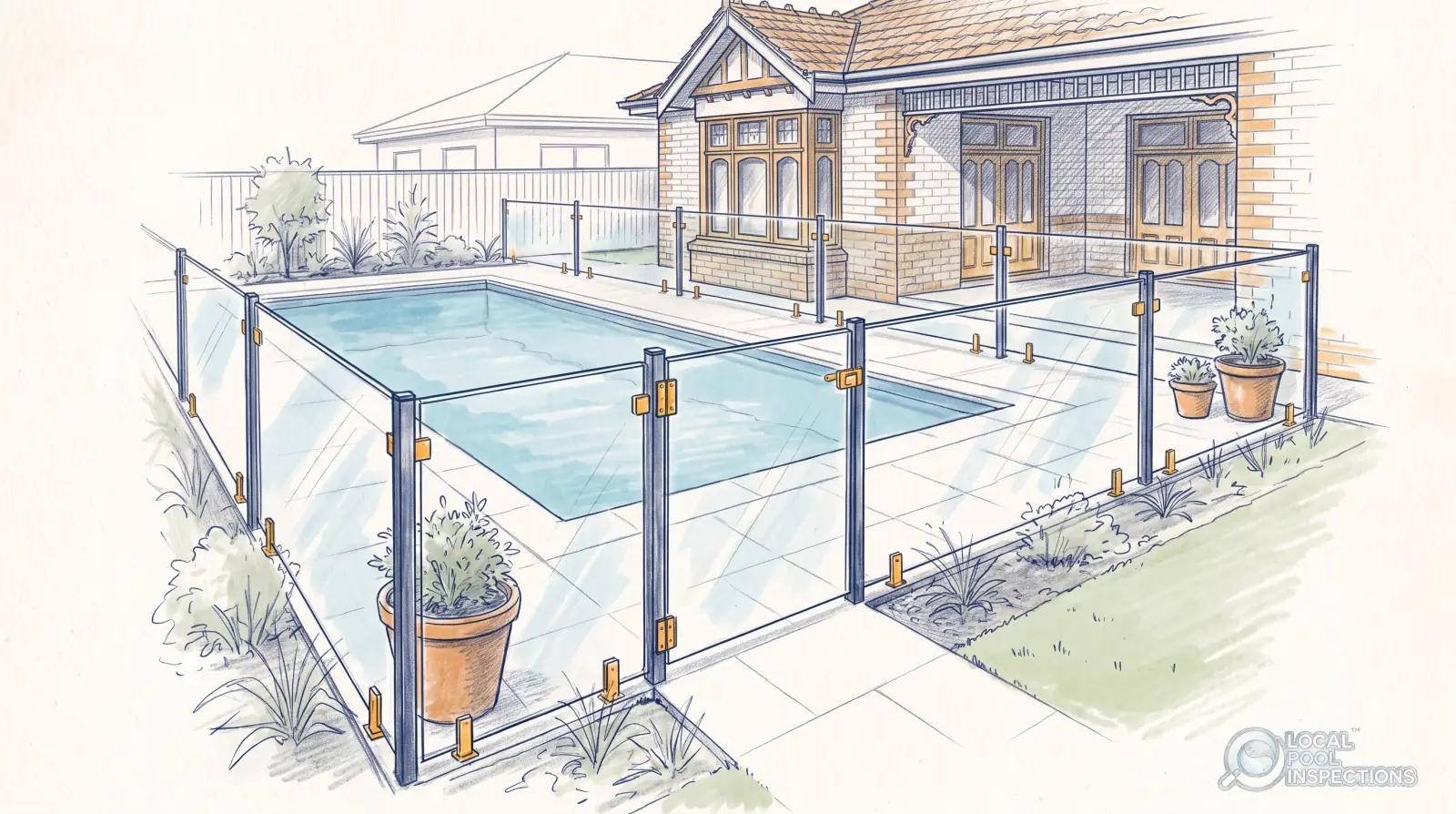
Only a person registered with the VBA as a Building Inspector (Pool Safety) can measure your barrier against these five points and issue the Form 23 Certificate of Pool and Spa Barrier Compliance your council needs. This checklist gets you ready for that visit — it isn't a substitute for it. For what that Victorian pool compliance certificate actually covers, what it costs and how long it lasts, see our dedicated guide.
We cover the CPR sign question in a separate post. Received a notice from council about your barrier? Here's what a council pool barrier letter means and how to respond.
Start here — a weak or worn gate spring is the single most common reason a Victorian pool barrier fails its first inspection, accounting for roughly a third of all fails we see. Open the gate to a crack of a few degrees — not wide open, just barely ajar — and let go. It has to swing itself shut and the latch has to engage without a push. Most gates pass easily from 90 degrees; it's the near-closed position where a tired spring loses tension and the gate stalls a few centimetres short.
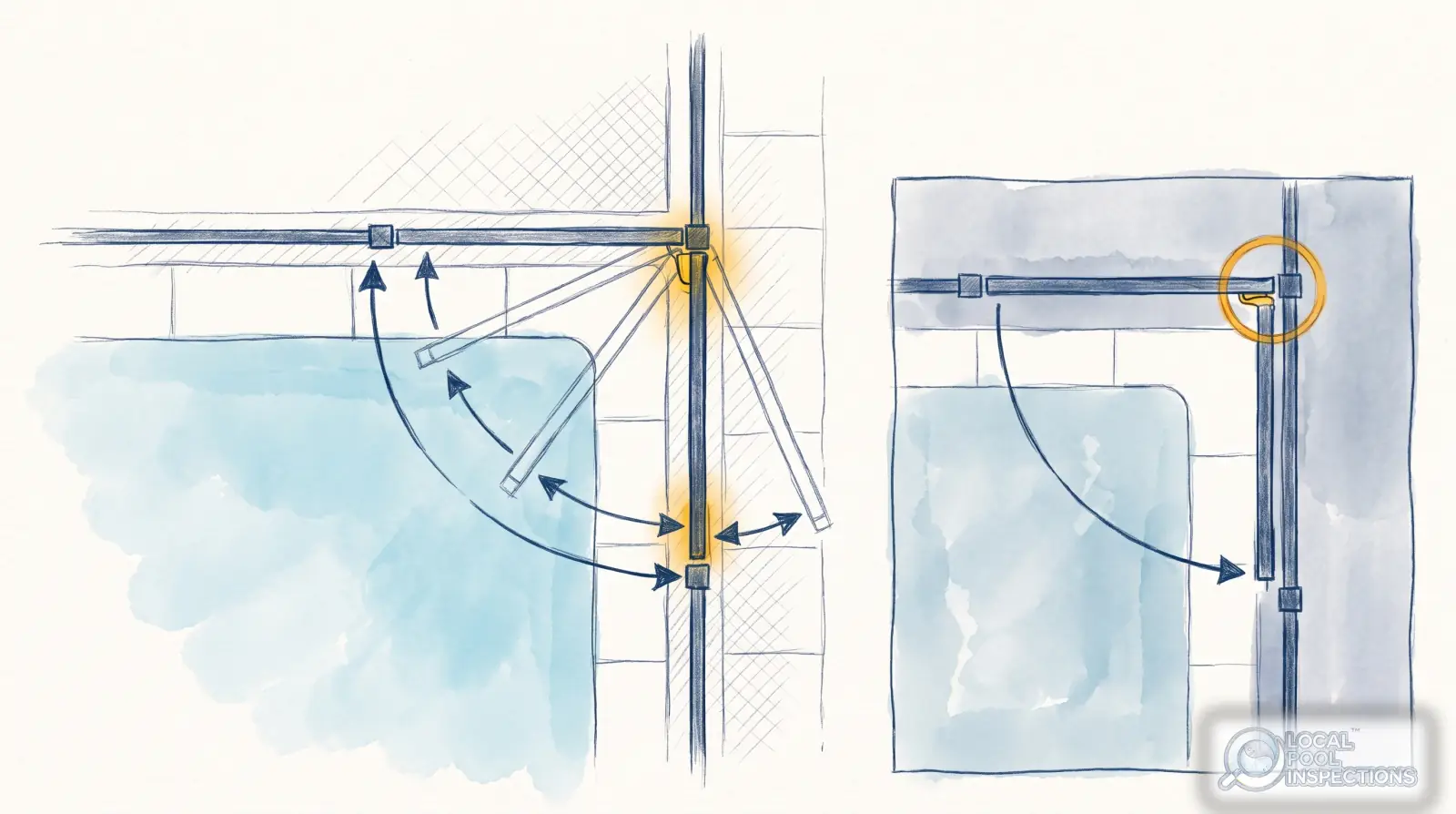
Two failure themes turn up again and again across the properties we inspect: a gate that isn't self-closing or self-latching from any position is the most common single item on a Non-Conformance Report statewide, and latch release sitting below 1500mm is the second most common — often because paving or landscaping work has quietly raised the ground level under the gate since it was last certified. Check the latch height with a tape measure from the finished outside ground, not from memory.
On coastal properties, watch salt-corroded hinges and latches losing tension — salt air seizes pivot pins and springs years faster than it would inland, so a hinge that looks fine from a distance can still be the reason the gate won't pull itself shut from a crack. A $30–$80 replacement spring or hinge is usually the entire fix (indicative estimate only — actual costs vary by site, materials and trades; get quotes).
Stand outside the fence and look at what's within arm's reach of the top rail — that's roughly the non-climbable zone. Climbable objects or vegetation inside the 900mm NCZ (generally 1200mm for pools built 1994–2010) is the second most common failure theme we see, and it creeps up slowly: a camellia or photinia planted as a seedling next to the fence when the pool was first certified can be well inside the zone a decade later. Pot plants, outdoor furniture, the pool pump housing, a garden bed edge, even a low retaining wall — anything that gives a foothold or handhold fails the check.
Barrier height under 1200mm is the other half of this walk. Soil build-up, landscaping creep, and mulch depth all raise the effective outside ground level over time, which lowers the barrier's effective height without anyone touching the fence itself. Measure from the current outside ground level at the lowest point around the entire perimeter, not just at one spot near the gate.
On sloping blocks, also check for retaining walls or steps creating a climb zone — a raised garden bed or a set of steps built against the outside of the fence can function exactly like a boosted foothold even if the fence itself measures 1200mm.
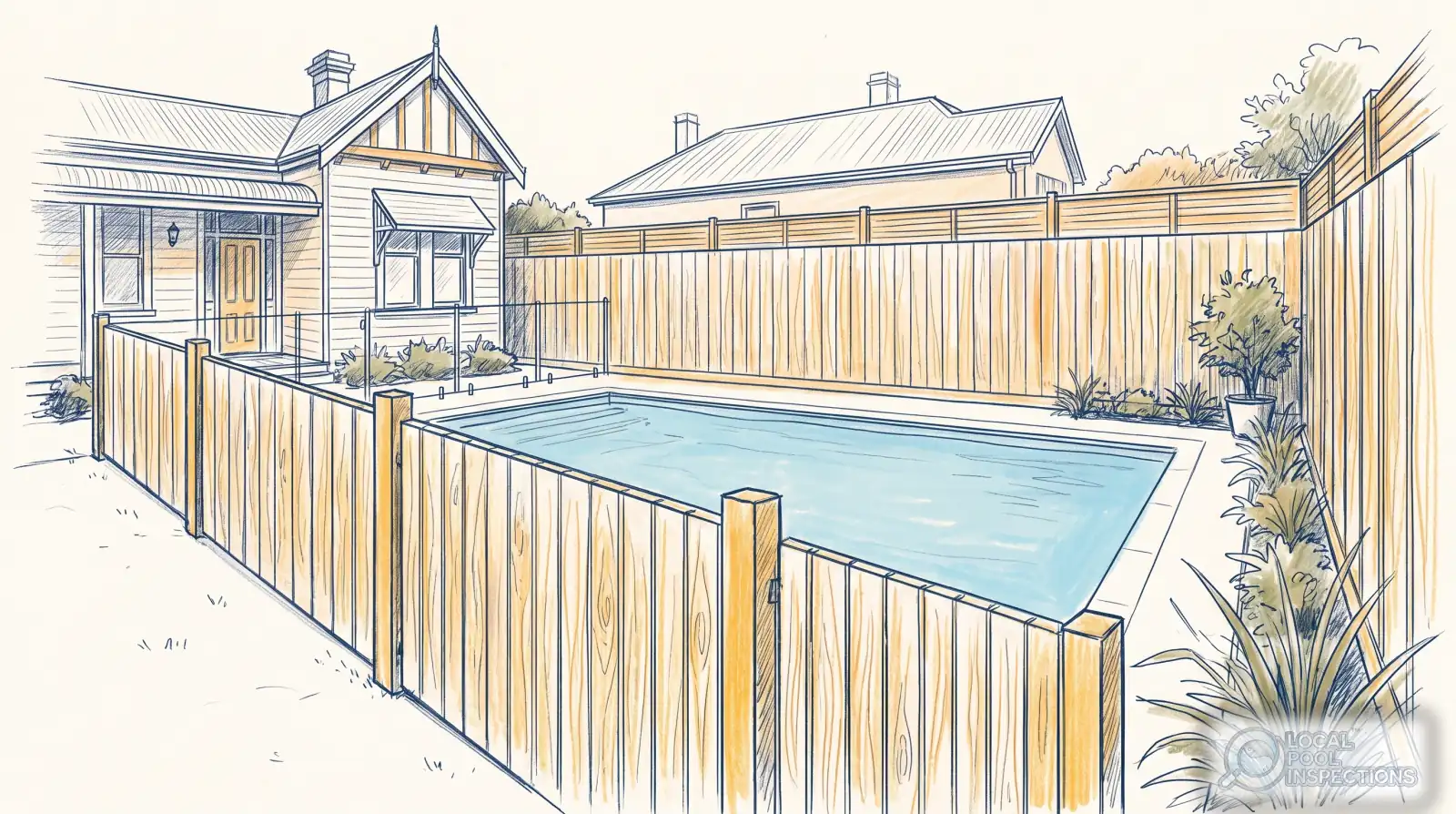
Yes — a lot of established Victorian properties use the existing property boundary fence as part of the pool barrier, and this is where boundary-fence sections not meeting height or NCZ requirements on the pool side trip owners up. A fence built decades ago for privacy, not pool compliance, often falls short on height or clearance once it's asked to double as a safety barrier. Walk the full perimeter, not just the purpose-built pool fencing — check every boundary section the same way.
Also check any windows or doors opening directly into the pool area. If a door or window from the house opens onto the pool enclosure without a compliant restrictor or self-closing device, it's treated as a gap in the barrier — a house wall isn't automatically compliant just because it's solid.
On newer growth-corridor properties, check one more thing specifically: builder-handover barriers altered during landscaping. A fence installed and signed off by the builder can be moved, re-hung, or have its spring tension reset during later landscaping work — often without anyone realising the barrier no longer meets the standard it was built to.
Yes, and it genuinely changes the outcome. Most of the common fails on this page — a weak gate spring, a plant inside the NCZ, a latch that's drifted below 1500mm — are visible in a 20-minute walk around the outside of your fence, no tools beyond a tape measure. Working through this checklist before you book won't issue you a certificate, but it puts you in a strong position for the formal visit rather than an unknown one.
If you're planning a new pool, reworking the yard, or want a second set of eyes on your self-check before the formal inspection, that's exactly what our compliance consultation service covers — independent advice against the same 1200mm and non-climbable-zone rules, not a sales pitch. If your barrier has already failed a formal inspection once, the re-inspections service covers the free follow-up visit once the listed items are fixed.
Once you've self-checked, the certified step is a full Form 23 pool safety inspection — $250 all-inclusive, same-day certificate where your barrier passes, free re-inspections if it doesn't. For the bigger picture on what pool compliance covers and how the pieces fit together, see our pool compliance Victoria guide.
This checklist tells you where your barrier is likely to fail before you book anyone. It doesn't replace the legal step: only a VBA-registered Building Inspector (Pool Safety) — see our pool certifier Victoria guide for how that title works — can measure your barrier against AS 1926.1 and issue the Form 23 your council requires under Victoria's four-year re-inspection cycle.
Councils vary on registration, lodgement channel and fees even though the barrier standard itself is statewide. If your property is in Geelong or on the Bellarine, our City of Greater Geelong compliance guide covers the council's process in full. In the western corridor — Werribee, Point Cook, Tarneit and the rest of the Wyndham growth suburbs — see the Wyndham City Council compliance guide instead, since the portal and fees are genuinely different. Bacchus Marsh, Ballan and the rest of the shire have their own process too — see the Moorabool Shire compliance guide. Further out at Melton, Melton West, Kurunjang and the rest of Melton Shire, registration and lodgement run through Melton City Council instead — a separate process again. Torquay and the coast fall under the Surf Coast Shire compliance guide, and the Borough of Queenscliffe has its own page covering Point Lonsdale.
If you're in the western corridor specifically, our Western Melbourne pool inspections hub covers same-day Form 23 booking across Wyndham, Melton and the Moorabool fringe.
Whatever your self-check turns up, there's a next step that fits.
Ready to get certified? Full barrier check against the VBA standard, same-day Form 23 where compliant.
Not sure your self-check was right? Independent advice against your actual fence, before you book a formal inspection.
Already failed once? The free follow-up visit once the listed items are fixed.