
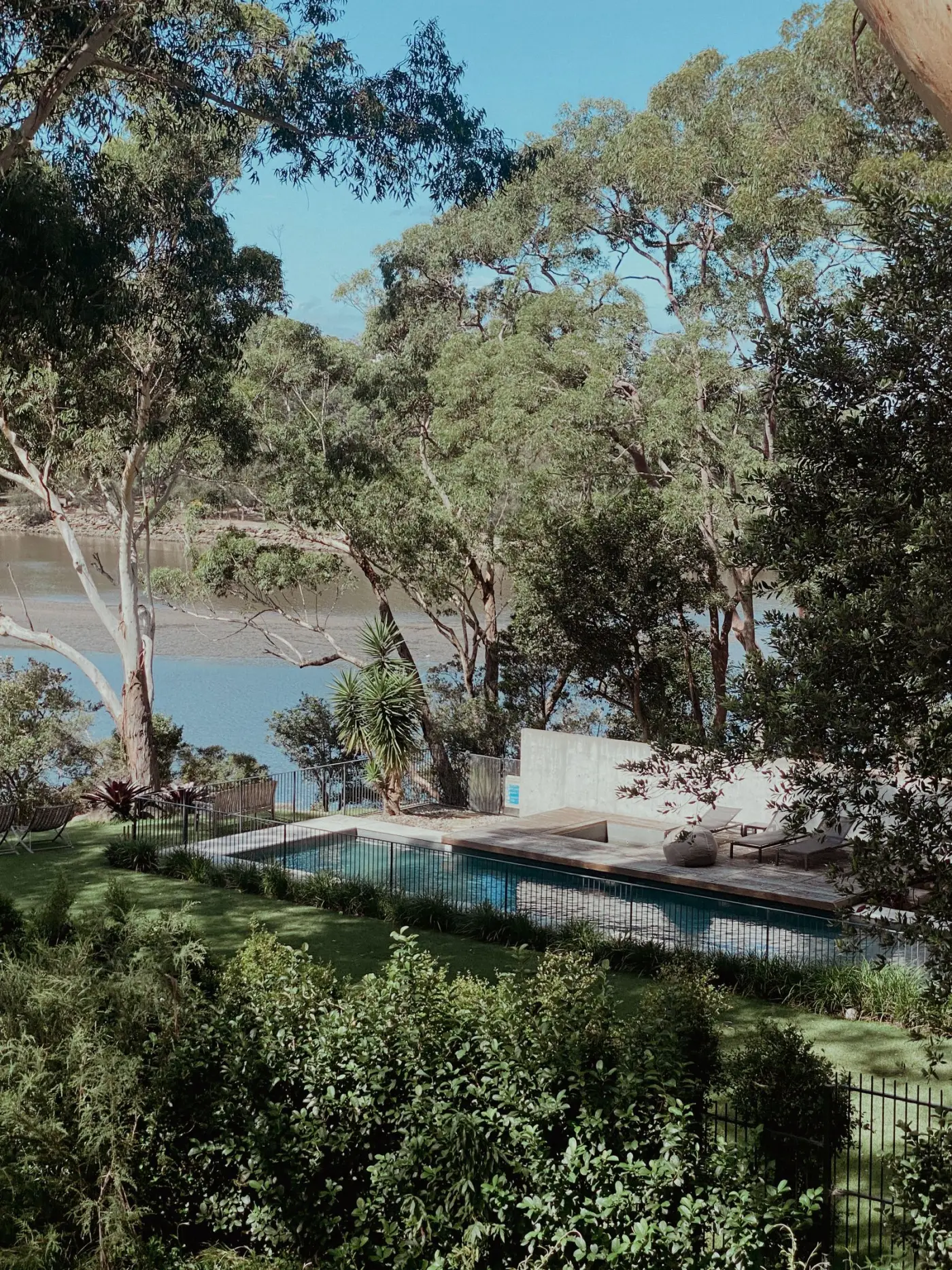
If you own a pool on the Bellarine Peninsula, your barrier faces failure modes inland Geelong pools rarely see. Salt-laden onshore winds, seasonal disuse, and the constant cycle of holiday-let occupancy combine to wear pool barrier hardware faster than most owners expect. Across Ocean Grove, Barwon Heads, Point Lonsdale, Portarlington, Indented Head and St Leonards, hardware corrosion is the #1 cause of Form 23 failures we record at Local Pool Inspections — and it’s almost always hidden until the inspector arrives.
Why Coastal Bellarine Is Different
Pool barriers across the Peninsula sit in a microclimate inland Geelong pools don’t experience:
- Onshore salt-laden winds — particularly from the south-west across Bass Strait. Salt particles settle on every exposed metal surface and accelerate corrosion.
- Higher humidity — coastal moisture keeps surfaces wet longer between rain events, extending the corrosion contact time.
- Seasonal disuse — many Bellarine pools are at holiday properties. Six months of inactivity per year means hardware sits without exercise; springs lose tension faster, hinges seize, latches stiffen.
- Holiday-let occupancy — Airbnb / Stayz turnover means heavy gate use over short periods, then long silences. Higher wear in compressed periods.
The result: hardware that would last 8–12 years on an inland Geelong property fails in 4–6 years on the Peninsula.
The Three Hardware Categories That Fail Most Often
1. Gate hinges
Stainless-steel hinges resist surface rust but the pivot pin and bushing bind up over time as salt accumulates. The result: the gate’s self-close mechanism can’t overcome the increased friction. The spring is fine, the gate just won’t close from cracked-open. Fix: strip and lubricate, or replace the hinge entirely. Cost forty to a hundred and twenty dollars per hinge, supplied and installed.
2. Self-close springs
Galvanised tension springs corrode from the inside out — invisible until the spring snaps or loses 60%+ of its tension. The “looks fine but doesn’t close” symptom is universal. Coastal pool gates need spring inspection every 3 years; inland 5–7 years.
3. Latch hardware
Latch tongues and strike plates accumulate salt corrosion at the contact points. The latch may engage but not consistently — sometimes catches, sometimes doesn’t. Worse than a clean fail because intermittent latches lull homeowners into thinking everything’s fine. Fix: full latch replacement; magnetic latches resist coastal corrosion better than gravity-drop latches — for a full breakdown of which hardware types hold up best, see our pool fence hardware guide.
Surface-Level vs Structural Corrosion
Inspectors distinguish between cosmetic surface rust (orange surface staining without structural compromise) and functional corrosion (where the hardware no longer performs to AS 1926.1-2012). Form 23 fails on functional corrosion only, but heavy surface rust is usually a warning sign that functional corrosion is days or weeks away.
If your gate hinges show even moderate surface rust, plan to address them in the next 12 months. Coastal corrosion compounds — by the time it’s visible, it’s usually further along than it looks.
Specific Failure Patterns by Bellarine Suburb
Ocean Grove
Mid-century holiday homes alongside newer permanent residences. Failure mix: hinge corrosion (#1), tired gate springs (#2), and where the renovation has happened recently — NCZ breaches from new landscaping not yet considered against the 900 mm rule (generally 1200 mm for pools built 1994–2010). Once the hardware is sorted, we cover the follow-up under our free Ocean Grove re-inspection.
Barwon Heads
Heritage character homes with corresponding heritage barriers. Common issue: timber paling fences that were compliant historically but have warped, weathered, and developed under-fence gaps. Hardware on metal gates is usually the same coastal corrosion picture, so it’s worth booking a Barwon Heads pool inspection if yours is due.
Point Lonsdale
Significant short-stay rental population. Pool gates see heavy use during holidays and long silences between. Self-close failure is the dominant pattern — if you’re due, we run Form 23 inspections in Point Lonsdale across the short-stay season.
Portarlington / Indented Head / St Leonards
Mix of permanent-resident pools and holiday-let inventory. The seasonal-use pattern hits hardware hard, which is why a pool safety inspection in Portarlington so often turns up worn gate springs — see our Portarlington homeowner guide for what to check first. NCZ breaches from established gardens are also common in the older residential areas.
Drysdale / Clifton Springs / Curlewis
Inland Bellarine, less direct salt exposure. Failure mix is closer to inland Geelong patterns — older fence design issues and NCZ. See our local guide to Curlewis and Clifton Springs pool compliance for the detail.
The Three-Year Hardware Health Check
For Bellarine pool owners, we recommend a basic hardware audit every 3 years, independent of the 4-year Form 23 cycle:
- Gate self-close test from 5° open — every quarter, ideally weekly during heavy-use periods
- Hinge inspection — visual check for surface rust, lubricate annually with marine-grade lithium grease
- Spring tension check — pull the gate to 5° open, time how long it takes to close. Compare to last year. If the time has doubled, plan a spring replacement.
- Latch test — confirm the latch engages on every close, not most
This 10-minute quarterly check picks up coastal hardware wear early, before it turns into a Form 23 fail.
Holiday-Let-Specific Considerations
If your Bellarine pool property is on Airbnb or Stayz, you have additional obligations — our guide to short-stay pool compliance in Victoria covers them in full:
- Form 23 must be current — same as for residential sale
- The certificate must be visible or available on request to short-stay guests
- If your guest brings small children, your gate’s self-close performance is no longer just a compliance issue — it’s a guest-safety one
For our complete pre-inspection self-check, see the pool inspection checklist for Victoria homeowners.
Pool safety services we provide
Coastal Bellarine pool inspection — $250 all-inclusive
VBA-registered, same-day Form 23 across the Peninsula. Free re-inspections if hardware remediation needed.
Call 0402 860 499 or book online.
Frequently Asked Questions
How does coastal salt air affect pool fence compliance in Victoria?
It corrodes the moving parts — hinges, spring closers, latch mechanisms. A gate that self-closed perfectly the day it went in can lose its spring tension within a few years near the bay, and that puts it outside AS 1926.1. An inspection tells you whether the hardware still holds up. Same $250 all-inclusive fee, wherever you are.
Which pool fence components fail most often in Bellarine coastal conditions?
Gate hardware, every time. Hinge tension and the spring-latch in particular. Under AS 1926.1 a gate has to self-close and self-latch from any open position (AS 1926.1-2007 Cl. 2.5.3), and once corrosion eats the spring tension, that's the test it fails. After that I'm looking at barrier posts and fixings, mainly where someone's used untreated steel close to the bay frontage.
Does a pool fence near the ocean need to be inspected more frequently than the standard 4-year cycle?
Legally, no. Victoria's 4-year re-inspection cycle under Building Regulations 2018 (Vic) is the same whether you're on the bay or inland. The law doesn't shorten it for coastal pools. But bay hardware wears quickly out there, so plenty of owners eyeball the gate themselves between statutory inspections. The Form 23 certifies compliance on the inspection date; the 4-year cycle is when re-certification is next due.
What materials perform best for pool fence hardware in coastal Bellarine?
That one's for your fencing contractor or licensed installer, not me. Which material suits your barrier and your exposure is their professional call. My job is to inspect and certify whether the barrier that's there meets AS 1926.1 on the day. Material choice and any remediation stay with you and your trades.
We’ve bought a Bellarine holiday house with a pool. Is the previous owner’s certificate still current?
Yes, the existing Form 23 still counts, because nothing resets when a property sells. You take over its four-year cycle, and council writes to you as the new owner with the date your next certificate is due. Walk the barrier anyway: salt air is hard on gate hinges and latches, and any repairs are now yours.